Skip to content
This movie requires Flash Player 9

Live Streams of Downtown Asheville, NC

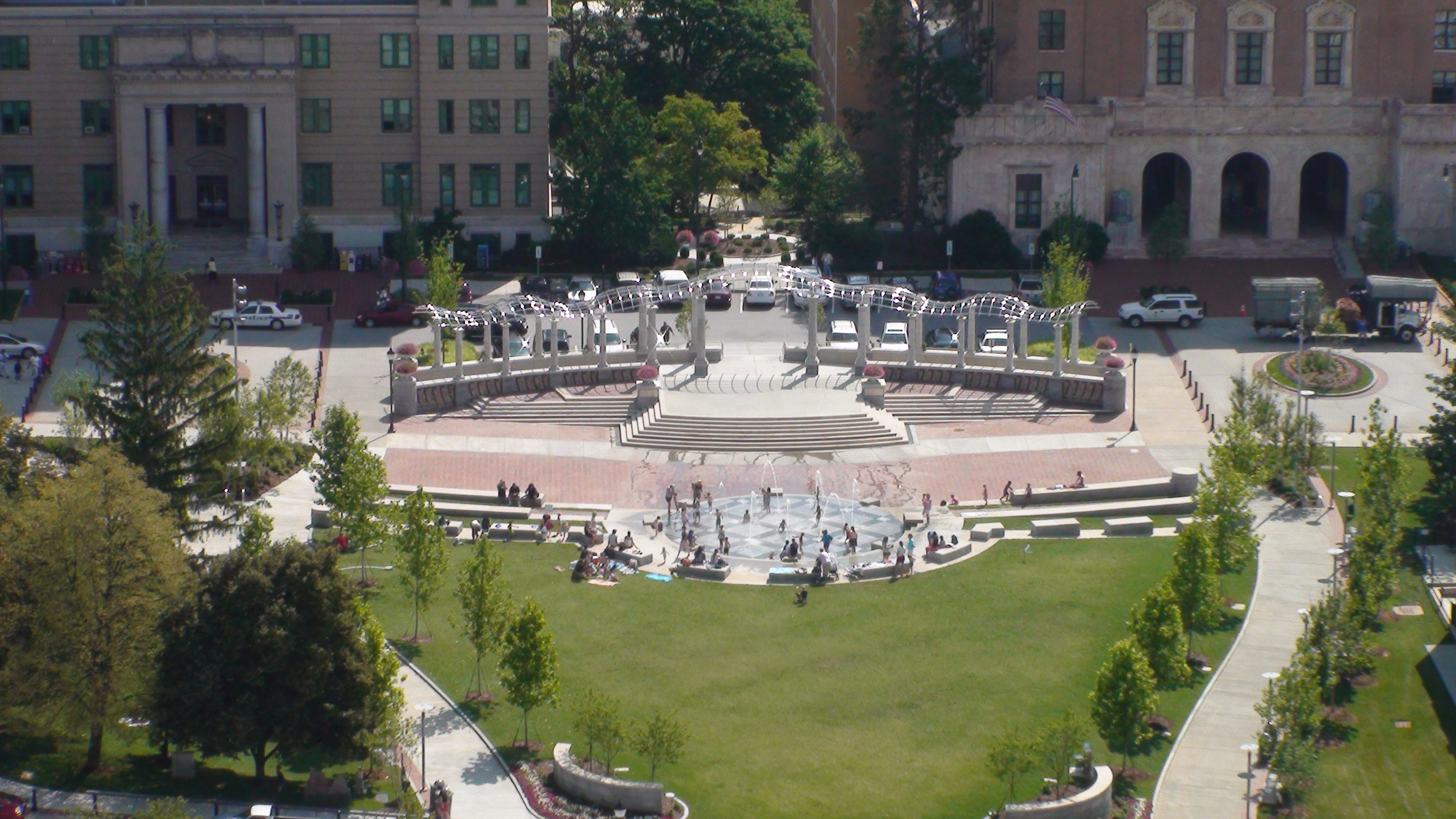
North Asheville, South Asheville, East Asheville, & West Asheville. From the top of downtown Asheville's tallest building, the centrally located BB&T Building, Wilcox World Travel and Tours brings you real-time, live streams of Pack Square, The Grove Park Inn, Westgate Bridge, The Asheville Tourists, Local Traffic, Pisgah Mountain and much more.

CELEBRATING VINTAGE N.C.

Salute!


Fourth Street, between Marshall and Spring streets, downtown Winston-Salem. 336-354-1500. www.salutencwine.com.


The ever-growing number of wineries in North Carolina has sparked a lively subgenre of tourism: Driving up to the Yadkin Valley – or to the coast or to the mountains – to walk the vineyards, sample vintages, sometimes have a bite to eat there and, on occasion, hear live music.


But with more than 100 wineries now in business, how can you filter to find the vintners whose product you’re sure to like?


An easy solution presents itself the afternoon of June 1 (a Saturday) in downtown Winston-Salem, where the centerpiece of Salute! The North Carolina Wine Celebration is an ultimate sampler. In tents along Fourth Street, approximately two dozen wineries will offer tastes of what they make. You’ll find familiar winemakers – like Asheville’s Biltmore Winery, or the Childress and Raylen vineyards from the Yadkin Valley – as well as ones you may never have heard of, but may wish to try. The list runs from Adams Vineyards, which makes muscadine wines in Willow Springs, to Westbend Vineyards, which makes reds and whites in Lewisville.


Here’s how it works: You buy a ticket – $20 advance, $25 the day of the event – and receive a wristband and commemorative wine glass. Then you stroll the rows of tents and sample what you wish. (This is an adults-only event; you must be 21 to attend.) There will also be vendors selling food.


Free entertainment will be offered: classic rock from Watt’s Left (noon-2 p.m.), country from Caleb Caudle and Haley Dreis (2:30-3:30 p.m., and the genre-crossing Below the Line (4-6 p.m.). At 9 p.m., the wine-and-music pairing continues at The Garage, with three bands ($10).


During the day, the “North Carolina Food Wine University” will offer five 45-minute presentations where chefs paired with wineries will help take some of the mystery out of the world of wine.


When: noon-6 p.m. June 1 (rain or shine).


Admission (adults only): $20; $25 day of event (if available).


Related events: Check the website for details on May 30-31 food-and-wine activities)


Distance from Charlotte: 90 minutes.


Directions: I-85 North to U.S. 52 (near Lexington); U.S. 52 North to exit 110-B in downtown Winston-Salem. Turn left on Martin Luther King Jr. Drive, left on Marshall Street; continue south and park near Fourth Street.


JOHN BORDSEN, COMMUNITY NEWS STAFF

Asheville Becomes America’s First Green Dining Destination™

For the first time ever, one of America’s cities, Asheville, North Carolina, has earned the official designation of being a Green Dining Destination™.  This achievement means that locals, tourists, and business people can dine at a plethora of Certified Green Restaurants® throughout Asheville. This accomplishment was driven by the Green Restaurant Association (GRA), Asheville Independent Restaurant Association (AIR), and the Blue Ridge Sustainability Institute (BRSI), who formed a local Coalition to encourage more environmentally sustainable practices within the city’s restaurants. 

“The Asheville area prides itself on a food culture that embraces fresh, innovative cuisine that integrates product from local growers and artisan food producers,” Asheville Convention Visitors Bureau Executive Director Stephanie Brown noted.  “The prestigious designation of “Green Dining Destination” is an accomplishment that adds to Asheville’s reputation as a distinctive culinary destination.”
 
All of Asheville’s Certified Green Restaurant
® have met the GRA’s rigorous certification standards by earning at least 100 GreenPoints™ in the categories of food, water, waste, energy, chemicals, and disposables. Additionally, each Certified Green Restaurant® has eliminated use of polystyrene foam, (aka StyroFoam™), and has implemented a full-scale recycling program.
  • The first interactive map of Asheville’s Certified Green Restaurants®
  • Certified Green Restaurant® listings 
  • Green Label Transparency Tools showing each Asheville Certified Green Restaurant®’s itemized environmental steps and GreenPoints™
  • Downloadable Suggestion Cards to encourage more restaurants to go green
  • Education on the environmental impact of the restaurant industry
  • Media content about Asheville’s Certified Green Restaurants®

North Carolina officials need to shift focus

Days In Rodanthe

With $20.8 million in federal emergency funding, work began last week on rebuilding dunes along N.C. 12 at Mirlo Beach and Rodanthe, where Hurricane Sandy and later storms washed out or covered sections of the road. Replenishing the beach at Rodanthe is also scheduled.

Mirlo Beach

Mirlo Beach (Photo credit: County of Dare)

The Army Corps of Engineers, meanwhile, is continuing to dredge the channel between Hatteras and Ocracoke. Temporary ferry service is now available. Full service is expected to return in mid-April, ahead of the summer tourism season.

As that season gets under way, the governor and others in Raleigh need to keep their focus on the Outer Banks’ needs. A long-term solution – including wiser land-use practices in the face of rising sea levels – are imperative. As is the repudiation of the conspiracy theorists who have for too long influenced environmental policy along the Atlantic shore.

In the meantime, state officials need to provide quick, definitive help to one of the state’s biggest tourism draws as soon as it’s needed.

Last year was one of the most successful on record for the Outer Banks, with gross occupancy receipts in Dare County alone hitting $382 million. That success won’t be replicated if people can’t get there.

Beer month showcases N.C.’s status as ‘Brewing mecca of the South’

English: Visitors posing with bottles of LoneR...

English: Visitors posing with bottles of LoneRider beer after a tour of the LoneRider Brewery in Raleigh, North Carolina. (Photo credit: Wikipedia)

N.C. Beer Month, brought to you by the state’s Division of Tourism, is a 30-day celebration of the craft beer industry. The group wants pint lovers to head out – responsibly, of course – to breweries across the state for all-things beer. That includes specialty brews, beer dinners, beer cooking classes, beer making and “beer memories” intended to last longer than those from college.

It’s called beer tourism, and local breweries are ready for you to belly up to the bar.

Wilmington’s Front Street Brewery is participating all month with pint specials, a beer-pairing dinner and a limited-edition beer with an undeniable coastal flavor.

Brewmaster Kevin Kozek took a bushel of Eagle Island Fruit Seafood oysters up to NoDa Brewing Co. in Charlotte where he and the NoDa crew brewed an oyster stout. He said it’s a dark, English-style stout with notes of briny oysters.

“It will have a faint saltiness to it,” Kozek said. “I think it will turn out awesome.”

The breweries made 20 kegs of the oyster stout, which are being divided between the watering holes for an April 11 debut. The collaboration is one of many happening across the state in an industry that put more than $7 billion into the state economy last year, according to The Beer Institute.

“North Carolina has become such a hot spot for the brewing industry,” said Ellie Craig, marketing director for Front Street Brewery. “It’s pretty intriguing.”

There are 61 brew pubs in the state, according to the N.C. Brewers Guild, and is lauded as the brewing mecca of the South.

“North Carolina breweries provide jobs to so many North Carolinians at every level and in every aspect of the industry,” said Maaike Brender À Brandis, part owner of Cape Fear Wine Beer in downtown Wilmington. “It gives our state another thing to be proud of.”

She said the craft beer industry is thriving partly because of Pop the Cap, a bill signed into law in 2005 that allowed beer alcohol content to jump from 6 percent to 15 percent and because consumers desire better quality in not only what they eat, but what they drink.

“It only makes sense that we would have a thriving craft beer scene,” Brender À Brandis said. “Consumers are educated and informed. They want to know who made what, where, how and why. Craft beer is quite transparent in that aspect.”

And it has made for good business.

Front Street’s Craig thinks the food and drink culture go hand in hand and movements like slow food, buying local and seasonal eating make for smart business partnerships.

Which is why the brewery is lining up regional providers such as Eagle Island and Shelton Herb Farm to contribute seafood, produce and meats for its April 11 beer-pairing dinner.

“The theme is From Our State to Your Plate,” Craig said. Tickets are $39 for the five-course meal and are available at the bar or online at Etix.com.

“There is so much happening across the state but we also have great beer right here,” Craig added.

So if you want to sip a pint without leaving the Port City or venture out on a beer vacation, you’ve got an entire month to explore the brew pubs scattered from the ocean to the mountains.

Cheers to that.


Metro desk: 343-2384

On Twitter: @StarNewsOnline

Move afoot to bring 37-mile rail line back to life

Rail Transport Museum Class 59 No 5910 light e...

The steam-powered locomotives chugged 37 miles between Gainesville and Helen, helping to forge a connection and commerce among rural North Georgia communities in the early part of the 20th century.

But progress crept in, with the advent of the automobile and roads and highways to support them, leading to the abandonment of the railroad in 1934.

Today, nearly 80 years later, the iron rails and wooden ties are gone. Beaten-down pathways serve as the lone reminder of that era.

However, forces are at work to bring new life to the former Gainesville Northwestern Railroad, with the concept forming to perhaps some day turn at least some of those stretches into bike and pedestrian trailways.

“This is an area that’s big on tourism and outdoor recreation, so anything you can create that feeds into that is likely going to succeed,” said Adam Hazell, planning director for the Gainesville-based Georgia Mountains Regional Commission.

“We think the idea of bona fide bikeways, preferably paved, would be very strong tourist draws.”

Hazell and Sarah McQuade, regional planner for the GMRC, have both discussed the trail recently with committees in the Gainesville-Hall Metropolitan Planning Organization, Hall’s main transportation planning group.

Public officials and others point to Georgia’s Silver Comet Trail as an example of a successful rails-to-trail project.

Traveling west through Cobb, Paulding and Polk counties, the 61½-mile trail was built on abandoned railroad lines. It connects to the 33-mile long Chief Ladiga Trail, which travels into east Alabama.

Another popular destination is the 35-mile Virginia Creeper Trail, which runs along southern Virginia near the Tennessee and North Carolina borders.

The big challenge for the Gainesville-Helen route, as area officials and historians have pointed out, is that much of the old railway lies on private — albeit, in some cases, very scenic — property.

“It goes through mostly residential property in Clermont,” said Sandra Cantrell, president of the Clermont Historical Society.

She noted that one of those properties belongs to her father. It goes through his backyard, she said.

“So, to do the project that has been proposed is not going to get done without a lot of hiccups along the way,” Cantrell said.

Public officials acknowledge there’s much work involved and nothing is near-term.

“It’s a vision right now, but if you don’t dream it, you can’t do it,” Hazell said.

Bill Huff, a Cleveland historian, said he believes that “eventually, we’ll put together a trail system — and I’m talking long-range, maybe 20 years — from Helen to the White County line and possibly into Hall County.”

He believes the endeavor should be pursued.

“We need more recreational trails in the area,” Huff said.

The Gainesville Northwestern ran roughly along much of what is now Clarks Bridge Road in Hall County, “after you leave downtown Gainesville and go up Limestone Parkway,” McQuade said.

After traveling through Clermont, it continued largely along where U.S. 129 now runs, north to Helen, including through downtown Cleveland.

In its day, the line was used primarily for logging purposes.

By 1926, regularly scheduled freight service was discontinued and passenger service followed in 1931.

“Between 1931 and 1934, the rail was kept operational, chiefly to assist with moving road-building materials,” according to a GMRC document on the rail line.

Huff said the reason that “Northwestern” was in the name “was that the owners had pipe dreams of extending the railroad to Hiawassee, Murphy, N.C., and then to the Tennessee Valley.

“The finances of the owners precluded that (from happening),” he said.

If Gainesville Northwestern is restored, it can be designated as a “nationally significant historic linear resource” and qualify for listing on the National Register of Historic Places, according to the GMRC.

The project has caught big interest in White County.

As the county developed a bicycle and pedestrian plan a couple of years ago, the Gainesville Northwestern “came to our attention,” said Chris Ernst, GIS technician for the county.

Since then, the county has worked with the GMRC and local historians on the effort.

“We’ve been trying to inform the community of the potential of the route,” he said.

Ernst said he believes the endeavor would benefit the area by “providing our population and visitors the opportunity to get out and enjoy White County … and that has an economic development side to it.”

Also, “the more of the trail that’s developed for bicycle and pedestrian use, the more we’re hoping to see folks using it as an alternative form of transportation.”

Does the Piedmont Triad have its footing back?

N.C. Commerce Secretary Sharon Decker

Major roads and cities in the Piedmont Triad a...

N.C. Commerce Secretary Sharon Decker speaks at the Piedmont Triad Partnership’s State of the Region breakfast Thursday.

Catherine Carlock Reporter- The Business Journal Email  | Twitter  | Google+  | LinkedIn

The importance of regionalism, keeping a focus on how to grow a competitive work force and the future of economic development in the Triad and across the state were all featured topics at the Piedmont Triad Partnership’s State of the Region breakfast Thursday.

A crowd of at least 500 economic developers, business and industry executives, government officials and community leaders gathered at the Marriott hotel near Piedmont Triad International Airport. They heard presentations from Ted Abernathy, the executive director of the Southern Growth Policies Board, and N.C. Commerce Secretary Sharon Decker as well as a panel discussion from High Point Chamber of Commerce President and CEO Tom Dayvault, Winston-Salem Mayor Allen Joines and Greensboro Partnership President and CEO Pat Danahy.

Decker outlined a five-tenet framework that the state will focus on in the future to reshape economic development across North Carolina.

Those tenets are a focus on health care, education, economic development and business recruitment, and quality of life.

“We’ve got to use what we’ve got to rebuild this economy, and I’m confident that together we can do just that,” Decker said.

Decker discussed the importance of addressing work force development to handle the skills gap, including focusing on apprenticeship and introducing students to the concept of skills development from a young age.

On the economic development side, Decker outlined the importance of international trade and exporting as well as tourism as an economic driver. She also discussed focusing on regional connectivity throughout the state, though those regions may look different than the standard economic development partnership regions currently in place.

Catherine Carlock covers commercial and residential real estate, construction, economic development and retailing and restaurants. Contact her at (336) 370-2918.

Film industry creates big business for Charlotte region

By: Adam Rhew


'); if(infobox=='True' ShowInfoBox_l691772_1==false){ jQuery("#player_infobarl691772_1").trigger('click'); ShowInfoBox_l691772_1==true; } }; if (false) { $.setup_player(Play_Conf); } //info bar setup jQuery('#player_infobarl691772_1').click(function() { var $info =jQuery('#player_info_contentl691772_1'); if($info.text()!=''){ var $content = jQuery('div',$info); //min heigth var min = $content.css('min-height'); var max = $content.css('max-height'); $info.slideToggle(600); ShowInfoBox_l691772_1=!ShowInfoBox_l691772_1; } }); });

CHARLOTTE — When the Showtime hit Homeland returns to the Queen City next month to shoot its third season, the production will employ local crews, actors and caterers.

“Anything that they can get in this region, there has to be a business base for and there are a lot of companies setting up shop here that weren’t here five years ago,” said Keith Sweeney, executive producer at Dalliance Films.

But those companies may be so busy they won’t have time for the next project. Producers say it’s the best kind of problem to have.

“I don’t necessarily think we’ve missed out on a lot but I think as Charlotte continues to grow with the film base, I think there is the potential to miss out on future productions,” said Sweeney.

Business and tourism leaders want to keep that from happening by growing the film industry here.

“The more production that comes to our area the more jobs and opportunities we can provide to people in this community and in North Carolina,” said Beth Petty of the Charlotte Regional Partnership.

Petty is the city’s main film recruiter. The regional partnership said the film industry pumps $500 million into the area economy each year.

“We are very busy,” Petty said.

North Carolina offers incentives to production companies, but Petty said the money only goes so far.

“You need a great crew base, you need diversity in locations, you need great hotels and restaurants,” said Petty.

Charlotte’s big draw is its diversity in locations. The regional partnership wants to build a bigger portfolio of places perfect for that next scene.

“We’re looking for all different sizes of homes and companies and different types of facilities,” said Petty.

In order to submit a property for consideration for a film location, click here.